
PRODUCTION DRAMATURGS
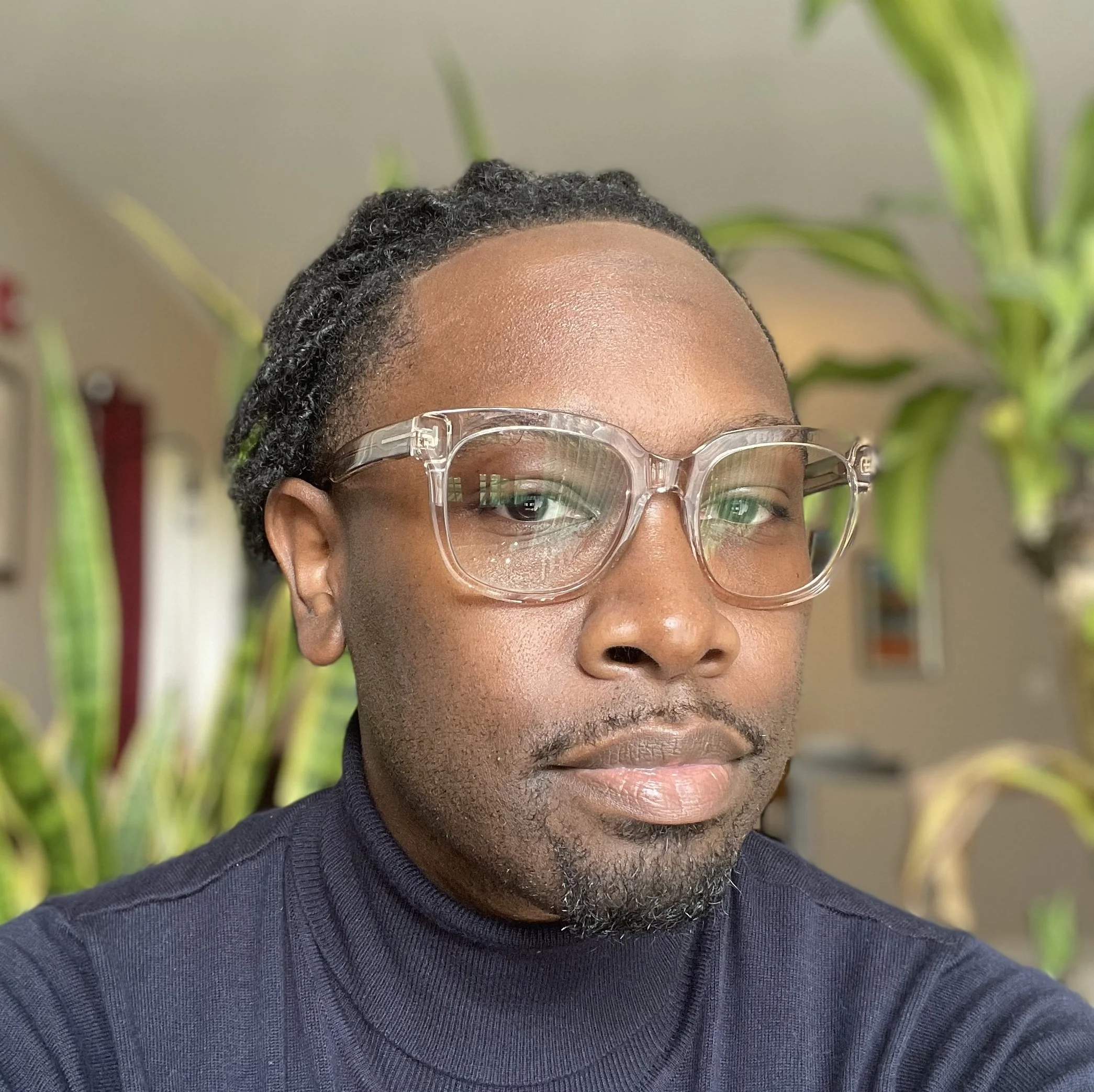
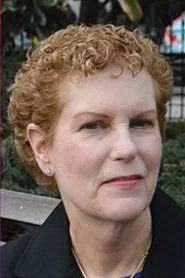
Director of Jewish Studies Program at American University & Patrick Clendenen Chair in Women's and Gender History Department of History at American University (DC)

with additional research support from . . .
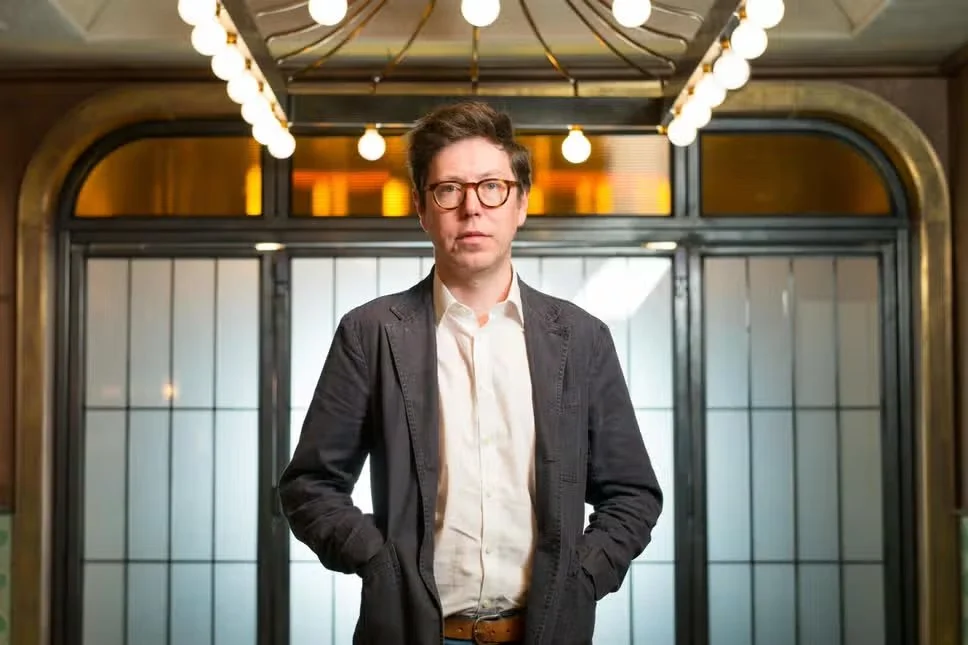
BEN POWER
Ben Power is a Tony Award winning and BAFTA and Olivier Award nominated writer for theatre and film. He is an Associate of the National Theatre.
His adaptation of The Lehman Trilogy transferred from the National Theatre to the West End and opened on Broadway in 2021. It was nominated for Olivier, Evening Standard and Drama League awards for Best Play, and in 2022 won the Tony Award for Best New Play.
From 2014-2019, he was Deputy Artistic Director of the National Theatre and, prior to that, an Associate of the theatre for four years. He commissioned and produced over seventy world premieres and in 2013 was responsible for the temporary theatre space, The Shed. His adaptations for the National include DH Lawrence’s Husbands & Sons, Euripides’ Medea, and Ibsen’s Emperor & Galilean.
Prior to joining the National, Ben was the first Associate Director of Headlong. Adaptations for the company include Six Characters in Search of an Author, Faustus (both with Rupert Goold) and Paradise Lost.
Other work for the theatre includes the dramaturgy on Complicite’s A Disappearing Number, which won the Olivier, Evening Standard and Critics’ Circle Awards for Best Play.
Screenplays include five films in the BBC Shakespeare series The Hollow Crown, which won RTS and Broadcasting Press Guild awards and were nominated for BAFTAs for Best Single Drama and Best Mini-Series.
He is currently writing feature screenplays for Netflix and MGM and a play for the National Theatre.
Recently he has written a feature for Netflix, MUNICH: THE EDGE OF WAR, and has an original series in development with Working Title, Raw and Netflix.
Adapting Playwright

STEFANO MASSINI
Stefano Massini is the first Italian author to receive a Tony Award. He is a novelist and playwright, who regularly contributes to the Italian newspaper La Repubblica. For several years he has served as artistic consultant at Piccolo Teatro di Milano – Teatro d'Europa. His works, including The Lehman Trilogy, have been translated into 27 languages, and his plays have been performed in more theatres around the world than those of any other living Italian writer, produced as far afield as Iran and Korea, and staged by directors such as Luca Ronconi and Sam Mendes. Other selected works include Intractable Woman, Ladies Football Club and 7 Minutes. He has won numerous Italian and foreign awards, including the Premio Vittorio Tondelli, the Premio Ubu, the Tony Award, the Drama Guild Award and the Outer Critics Circle Award. Qualcosa sui Lehman (The Lehman Trilogy) won the Selezione Campiello Prize, the Super Mondello Prize, the De Sica Prize, the Prix Médicis Essai and the Prix Meilleur Livre Étranger. He has just finished creating a new multi-part play about the history of the atomic bomb, entitled Manhattan Project.
Book Author & Original Playwright
ABOUT THE LEHMAN TRILOGY
History
The Lehman Trilogy made its English language debut in London on July 12, 2018 at the National Theatre's Lyttelton Theatre. Directed by Sam Mendes, the production featured Simon Russell Beale, Adam Godley and Ben Miles. On October 14, 2021, the play opened on Broadway, again directed by Mendes and starring Beale and Godley, with Adrian Lester replacing Miles.
Play History
On a cold September morning in 1844, a young man from Bavaria stands on a New York dockside dreaming of a new life in the new world. He is joined by his two brothers, and an American epic begins. 163 years later, the firm they establish – Lehman Brothers – spectacularly collapses into bankruptcy, triggering the largest financial crisis in history.
Weaving together nearly two centuries of family history, this epic theatrical event charts the humble beginnings, outrageous successes and devastating failure of the financial institution that would ultimately bring the global economy to its knees. The Lehman Trilogy is the quintessential story of western capitalism, rendered through the lens of a single immigrant family.
Note: Nick Powell’s original music from the Broadway and West End productions (which is available for streaming on music platforms) is not approved or licensed by Concord Theatricals for use in performance.
National Theatre: The Cast of The Lehman Trilogy
Actors Simon Russell Beale, Adam Godley and Ben Miles reflect on the challenges and rewards of performing in The Lehman Trilogy, chaired by Sarah Hemming.
The Lehman Trilogy
A Novel
Basis for the 2022 'Tony Award Best Play winner
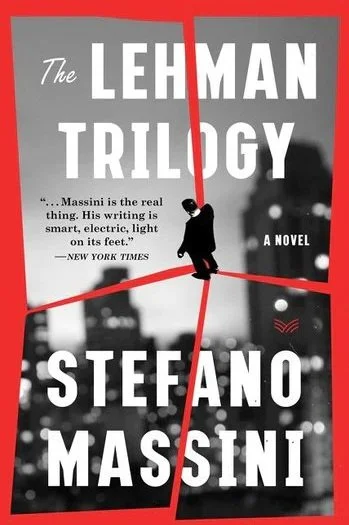
Magnificent in scope, internationally lauded, and transcendent, the novel in verse that inspired the sensational West End and Broadway play of the same name. The Lehman Trilogy follows the epic rise and fall of three generations of that infamous family and through them tells the story of American ambition and hubris.
By Stefano Massini, Translated by Richard Dixon
THE LEHMAN BROTHERS & THEIR FAMILY

Henry Lehman
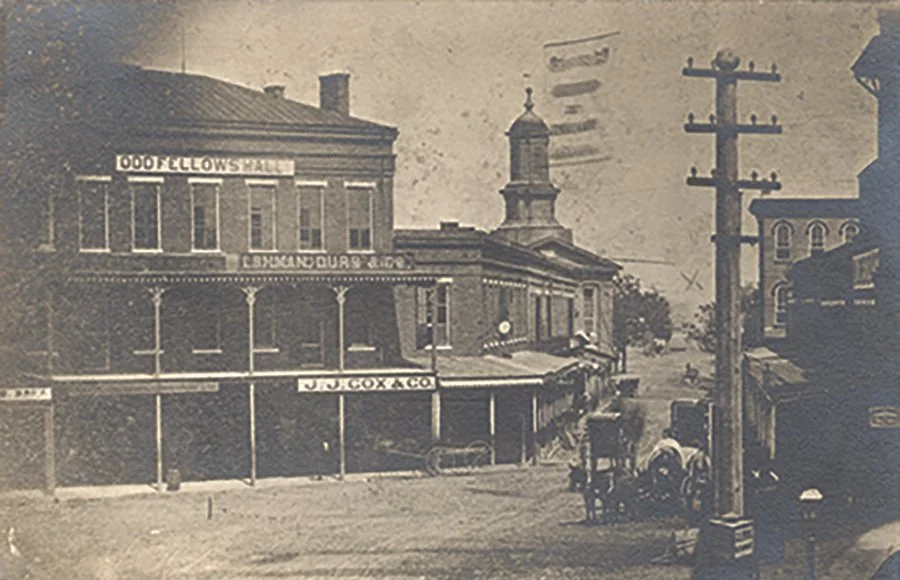
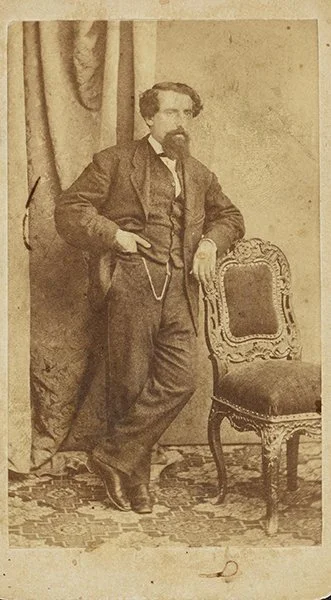
Henry Lehman (1822-1855) was a German-American businessman and the founder of Lehman Brothers financial services, which declared bankruptcy in 2008. Henry Lehman emigrated to the United States in 1844. He settled in Montgomery, Alabama, and opened a dry goods store named, "H. Lehman". In 1847, following the arrival of his younger brother Emanuel Lehman, the firm became, "H. Lehman and Bro." With the 1850 arrival of Mayer Lehman, the youngest brother, the firm became "Lehman Brothers".
Emanuel Lehman
Emanuel Lehman (1828-1907) was one of three Jewish-German immigrant brothers whose cotton brokerage, founded in Montgomery during the mid-nineteenth century, eventually expanded to become the financial conglomerate Lehman Brothers. In 1858 Emanuel opened a branch of the company's cotton brokerage in New York City, which became the company's headquarters following the Civil War. The firm collapsed in the wake of the 2007 mortgage crisis.
Mayer Lehman
Mayer Lehman (1830-1897) was one of three Jewish-German immigrant brothers who founded the company that would become financial giant Lehman Brothers in Montgomery, Montgomery County. during the mid-nineteenth century. During the late 1850s and early 1860s, Mayer ran the company's office in Montgomery while his brother, Emanuel, ran its main branch in New York City. Lehman Brothers was one of the more notable casualties of the 2007 mortgage crisis and ensuing Great Recession.
Lehman (Brothers) Family Tree
THE RISE, FALL, AND REMNANTS OF LEHMAN BROTHERS
The Alabama origin of Lehman Bros.
Lehman Bros. began on Commerce Street in Montgomery. | By Scotty Kirkland | January 28, 2022
Lehman Brothers collapse: where are the key figures now?
Ten years ago this weekend Lehman Brothers crashed into bankruptcy – the biggest corporate failure in history – and sent the world’s financial system reeling close to collapse, causing panic among policymakers on both sides of the Atlantic. The US government was forced into a $700bn (£540bn) bailout of the banking sector, while in the UK, Lloyds Bank rescued HBOS and the government was then forced to rescue Lloyds and Royal Bank of Scotland.
A decade on, what has happened to the key players involved in the financial crisis and its aftermath?
In New York harbor on a mid-September day in 1844, a long voyage to America came to an end for a 21-year-old Bavarian man named Hajum Lehmann. He adopted the Americanized name Henry Lehman and set out to find his way in the New World. The business he launched a few years later with two of his younger brothers grew from small Alabama beginnings into one of the largest companies in American history.
Lehman arrived in Mobile a few months after getting to New York. There, he obtained an important education in the cotton-based economy of Antebellum America. Along Mobile’s crowded docks, Lehman could observe cotton from the hinterland departing on ships bound for textile factories in New England and Europe. At the same time, goods, supplies and home furnishings — most of them paid for with cotton profits — arrived in Mobile and were loaded onto smaller vessels headed upriver. Sensing opportunity to occupy that necessary middle ground between producer and consumer, young Lehman followed the waters northward.
The Collapse of Lehman Brothers - A Simple Overview
The Lehman Brothers bankruptcy is the largest one of all time and it helped spark the 2008 financial crisis. The subject can be a bit complex but given that it's such a historical event, I think it's worth learning about. In this video, I did my best to give a simple overview of the situation
Sept.-Oct. 2008 Coverage of the Financial Crisis
LEHMAN BROTHERS, COTTON, AND THE FINANCIAL SYSTEM
In 2013, the Italian playwright Stefano Massini turned this exemplum into The Lehman Trilogy, an epic five-hour play that was adapted and condensed last year by the director Sam Mendes and playwright Ben Power for the National Theatre in London. The play received rapturous reviews, and further plaudits after a limited run this spring in New York; it has just returned to London’s West End, where its continued success seems assured. The story begins in 1844, when Hayum Lehman emigrated from Bavaria to Mobile, Alabama. He changed his name to Henry and worked as an itinerant peddler before opening a small dry-goods store upriver, in Montgomery. Soon, two of his younger brothers, Mendel (Emanuel) and Mayer, joined him, and the dry goods store gradually evolved, first into a brokerage, and then into a bank. The play presents this arc as a parable of moral decline, from selling “goods,” to selling financial abstractions. “We are merchants of money,” second-generation Philip Lehman declares in Power’s translation: “our flour is money.”
By KEN SWEET AP Business Writer | July 27, 2023, 6:12 PM
NEW YORK -- Some of the companies that formed what is now Citigroup likely benefitted financially from slavery in the 1800's, the financial giant acknowledged Thursday, an admission that comes at a time when numerous institutions are re-examining their historic roots and the roles they played in slavery in the U.S.
In research conducted last year, Citi found that none of its predecessor companies directly purchased, sold, or held slaves. But the research did find that some of predecessor entities “likely indirectly profited from the institution of slavery through financial transactions and relationships with individuals and entities located or operating in the United States before 1866.”
Many of the nation’s biggest banks including Citi are conglomerations of financial institutions that have merged or bought each other over many years. Citi traces its founding back to 1812 when the City Bank of New York was created.
One of Citi’s most prominent presidents in the 19th Century was Moses Taylor, who did business in Cuba that used slave labor to farm sugar.
“Given that a significant portion of Taylor’s businesses was connected to the trade of sugar and its derivatives from Cuban plantations that used slave labor, City Bank of New York likely profited indirectly from enslaved labor in Cuba by engaging in transactions with Taylor and his businesses," wrote Edward Skyler, Citi's head of public affairs, in a blog post Thursday.
The bank also had found other directors or founders likely owned slaves through Lehman Brothers, which was founded in Alabama. Citi purchased parts of Lehman in the late 1990s.
Citi is not the first bank to admit it had connections to the institution of slavery.
In 2005, JPMorgan Chase acknowledged that two of its predecessor banks had specific links to the slave trade. In JPMorgan’s case, two banks in Louisiana received thousands of slaves that were used as collateral.
The Charlotte, N.C.-based bank Wachovia, which failed in the 2008 financial crisis and was subsequently bought by Wells Fargo, also admitted in 2005 that it had roots back to slavery. Wachovia found the Bank of Charleston and Georgia Railroad and Banking Company both owned slaves.
Cotton, Mortgages, and the Lehman Brothers
November 26, 2021 | Posted by: Ellen Terrell
In spite of Broadway being an artistic business, it isn’t often that business themes themselves end up on a Broadway stage though there have been a few productions such as the musicals How to Succeed in Business Without Really Trying and Hamilton. Now Broadway has another, The Lehman Trilogy, a 3-act play that looks at the three Lehman brothers, Henry, Mayer, and Emanuel, who founded Lehman Brothers. The play tells some of the story of the brothers and the history of the firm over its 164-year history as it grew from small entrepreneurial beginnings to a global financial services firm caught up in the global financial crisis of 2007/2008.
Is this karma, or what?: Lehman Bros. link to slavery
By Dolores Cox | Published Oct 23, 2008 10:09 PM
Several financial institutions involved in the current U.S. economic crisis—Lehman Bros., Wachovia Bank, Chase Bank and Aetna Inc.—have interesting background stories and one thing in common: their connection to the inhumane institution of slavery.
Numerous capitalist merchants benefited hugely from the transatlantic slave trade and the industries associated with it. For several centuries the economies of the U.S. North and South were intertwined by slavery. By the mid-1800s, capital investment in slaves was higher than the value of land or any other capital worth.
Slavery and the Northern Economy
Episode 3, Season 1: Follow the money. Dr. Christy Clark-Pujara explains why American slavery couldn't have existed without a national commercial infrastructure that supported and benefited from the labor of enslaved people.
"Hauling Cotton Bales, U.S. South, 1850s", Slavery Images: A Visual Record of the African Slave Trade and Slave Life in the Early African Diaspora
‘The Lehman Trilogy’ and Wall Street’s Debt to Slavery
By Webmaster | November 10, 2021
GLOSSARY
-
(literally “son of the commandment” - the ceremony for women is called bat mitzvah). Refers to the coming-of-age ceremony when an adolescent reaches religious maturity, and assumes the rights and responsibilities of an adult. Conducted on the first Sabbath after the boy’s thirteenth birthday. His family meets at the synagogue, and during the ceremony he is invited for the first time to read the Torah.
-
(literally “Blessed be the name”). Thanks to God. HaShem (“the name”) is the reverential substitution for the divine name Jhwh, which cannot be pronounced.
-
Leavened foods. Forbidden during Pesach (Passover - see entry on Pesach).
-
Pronounced “hu-pah”. Nuptial canopy under which the wedding ceremony takes place. Consists of a cloth supported by four poles, which may be held up by four attendants. Symbolizes the couple’s future marital home.
-
B’rit milah, (literally, “covenant of circumcision”), also called a bris, refers to a religious ritual through which male babies are formally welcomed into the Jewish people. Jewish males were circumcised at the age of eight days.
-
(literally “dedication”). The Festival of Lights, commemorating the reconsecration (Dedication) of the Temple of Jerusalem in 164 CE by Judas Maccabeus. Begins at sunset on the 24th day of the month of Kislev, and lasts eight days, during which the candles of the eight-branch candelabrum are lit one by one.
-
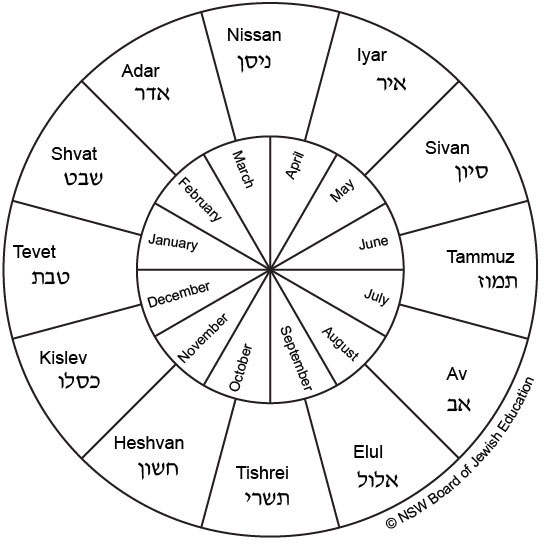
Referenced on pgs 85-88. The months of the Hebrew calendar are Tishri, Cheshvan, Kislev, Tevet, Shevat, Adar, Nisan, Iyar, Sivan, Tammuz, Av, and Elul. It is based off a lunar calendar. The ‘first month’ of the Jewish calendar is the month of Nisan; however, the Jewish New Year is in Tishrei, the seventh month, and that is when the year number is increased.
-
A Rabbi who was quoted in a popular collection of post biblical literature.
Pages 82-84: Quotes attribute Judah Ben Temah (“at twenty”, “at thirty”, “at forty”) are actually from the Mishnah. The original quote:
He used to say:
At five years of age the study of Scripture;
At ten the study of Mishnah;
At thirteen subject to the commandments;
At fifteen the study of Talmud;
At eighteen the bridal canopy;
At twenty for pursuit [of livelihood];
At thirty the peak of strength;
At forty wisdom;
At fifty able to give counsel;
At sixty old age;
At seventy fullness of years;
At eighty the age of “strength”;
At ninety a bent body;
At one hundred, as good as dead and gone completely out of the world.
Although this mishnah begins “he used to say” and therefore seems to be Judah ben Tema’s words, according to the Tosafot Yom Tov (a rabbi and Talmudist) it is actually the words of Shmuel Hakatan (a Babylonian Jew considered a great early religious scholar).
-
Pronounced “Kah dish”. Aramaic, not Hebrew. A hymn praising God, recited during Jewish prayer services. The best known is the Mourner’s Kaddish, spoken during the bereavement period and to mark the anniversary of a death of a loved one. It never mentions death or dying but instead glorifies God.
-
Anglicization of the Yiddish word for “kiss,” pronounced like “kiss” except with an “sh” at the end instead of “ss.” In the original novel, Mayer Lehman becomes known as Kish-Kish because of his unique ability to sweet talk potential clients and earn their trust.
-
(literally “doorpost”). Refers to a ritual object, a parchment on which are written the Torah passages corresponding to the first two parts of the Shema (see entry on Shema). The mezuzah is placed on the doorpost, to the right as one enters, at a height of about two-thirds of the door, and in any event at hand height.
-
The code of oral tradition, the body of teaching passed down by Moses. Has become one of the two parts of the Talmud (see entry on Talmud).
-
Passover (literally “passage”). Festival commemorating the Flight of the Jews into Egypt. Starts on the 15th day of Nisan, the first month of the Hebrew year, and lasts seven days.
-
(literally “lots”). Pronounced “pour-um”, should be said with a German accent in an American way. Festival commemorating the freeing of Jews from massacre at the hands of an Achaemenid Empire official named Haram, as recounted in the Book of Esther. It is customary to wear masks and get drunk, and it is the most joyous festival of the Jewish calendar. In 19th century America, it became an occasion for dress balls.
-
(literally “cessation”). Sabbath, weekly day of rest. Festival that celebrated God’s rest on the seventh day of creation. Characterized by rest from work activities and by the ritual of the synagogue. Takes place from sundown on Friday to an hour after sundown on Saturday.
-
(literally “weeks”). Pronounced “shaw-voo-oat”. Takes place 50 days after Passover (see “Pesach”). Festival commemorating the gift of the Torah to the Jewish people on Mount Sinai (aka when Moses got the Ten Commandments). In ancient times, it celebrated the first fruits and the harvest.
-
The period of thirty days that follow burial (including the shiva — see corresponding entry). During this time, those in mourning may not marry or attend a seudat mitzvah (“festive religious meal”); men may not shave or cut their hair, wear new clothes, etc.
Tearing of suits: A sign that the person is in mourning. Before the funeral takes place, the Rabbi goes to the family and cuts the edge of the suit. It identifies you as an immediate mourner that says the Kaddish.
-
(literally “listening”). Prayer of central importance in Jewish ritual. Is recited twice a day, in morning and evening prayer.
-
(literally “seven”). The traditional seven-day period of mourning on the death of close relatives. During this period, mourners gather in the house of one of them and receive visitors. Traditionally there is no exchange of greetings or words, and visitors wait for those in mourning to begin conversations. Mourners are not obliged to make conversation and can ignore visitors completely. Visitors often bring food and serve it to those present so that mourners do not have to cook or carry out other activities.
-
Hebrew for huts — plural of sukka (a singular hut). A festivity that celebrates and recalls the exodus of the Jewish people into the Sinai desert to reach the promised land of Israel. It is celebrated on the fifth day after Yom Kippur during which a hut is built using branches where food is eaten and prayers are offered. From Pamela: Pronounced “sue-coat”; the booth is pronounced “suh-kah”.
-
(literally “teaching,” “study,” “discussion”). The sacred, normative text that forms the basis of Jewish culture, theology, and laws of practice — the so-called Oral Torah.
-
From the Book of Exodus.
-
(literally “teaching”, “law”). The Law given by God to Moses on Mount Sinai. The Written Torah comprises the first five books of the Bible (Pentateuch): Bereshit (Genesis), Shemot (Exodus), Vayikra (Leviticus), Bemidbar (Numbers), Devarim (Deuteronomy). The Orah Torah (see entry on “Talmud”) is the tradition of the masters collected in the works of rabbinic literature and never completed.
Hebrew Calendar
Did It Really Happen?
-
No. In 1974, Philippe Petit famously did a tightrope walk between the Twin Towers. But no one consistently did this walk in front of the New York Stock Exchange, and certainly no one by the name of Solomon Paprinskij.
-
United Railways did exist, and it was indeed Baltimore-based. However it began only from 1899. It declared bankruptcy in 1933.
Lehman Brothers did invest in railroads, but no specific record of it investing in United Railways specifically (more on United Railways).
No historical record of Archibald Davidson; likely a fictional creation.
-
1. If there was a real Rabbi Lewinsohn, he was not the synagogue rabbi then. As a teacher in a religious school, his name would not have been preserved.
2. There was no Hebrew school at Temple Emanu-el. It was called religious school.
3. Most importantly, Herbert Lehman would not have had a bar mitzvah there in 1887, because that temple, like many other Reform congregations, abolished bar mitzvah at some point in the 1870s!
-
Not really. Building the Panama Canal was more of a US government initiative. It was overseen by US President Theodore Roosevelt, and the vote to finalize its location was done by the US Senate — not any private corporation.
Unclear whether the Lehmans helped fund it at all.
-
Yes. Herbert Lehman was a popular and liberal-minded politician in his time, winning a record eight statewide electoral victories that still stands today.
-
Possible origins of this myth: anecdotal observations that connected an unrelated suicide to the event of the stock market crash; dark humor memes of the day.
Digital Resources
Interviews, Recordings, & Music
Eternal Light 630519 0938 A Conversation with Herbert H. Lehman, Old Time Radio
The Eternal Light was an American radio and television program on the NBC Radio Network, produced in conjunction with the Jewish Theological Seminary, that was broadcast between 1944 and 1989. Featuring interviews, commentary, and award-winning dramas from the perspective of Judaism, it began on radio in 1944 and continued as a weekly radio program through 1989. A 1946 program, for example, dramatized humanitarian Lilian Wald's founding of New York City's Henry Street Settlement in 1895. A May 31, 1959, program featured a tour of the Holy Land narrated by Ralph Bellamy.
LONGINES-WITTNAUER WITH HERBERT H. LEHMAN - National Archives and Records Administration - ARC Identifier 95875 / Local Identifier LW-LW-275 - Brought to you by Longines, World's Most Honored Watch. Copied by IASL Master Scanner Thomas Gideon.
National Archives and Records Administration - ARC Identifier 95875 / Local Identifier LW-LW-275 - Brought to you by Longines, World's Most Honored Watch. Copied by IASL Master Scanner Thomas Gideon.
Dick Fuld (ex-CEO of Lehman): 'I clearly made mistakes'
Longines-Wittnauer with Herbert H. Lehman
National Archives and Records Administration 1952-04-16 - ARC Identifier 95748 / Local Identifier LW-LW-79 - TELEVISION INTERVIEW: William Bradford Huie and Lucian Warren talk with Sen. Lehman on immigration, Press Harry Truman's seizure of the steel mills, and potential Democratic presidential candidates. DVD copied by IASL Master Scanner Katie Filbert.
Longines Chronoscope with Sen. Herbert H. Lehman
Richard Fuld - Lehman Brothers Banruptcy Testimony
Mr. Richard Fuld addresses questions from the US House Oversight and Government Reform Committee on the Causes and Effects of Lehman Brothers Bankruptcy. Delivered 6 October 2006, Washington, D.C. Courtesy C-SPAN. Audio-enhanced by AmericanRhetoric.com.
Complete transcript and audio at: https://www.americanrhetoric.com/speeches/richardfuldlehmanbrosbankruptcytestimony.htm
Pete Peterson on Inspiration New videos DAILY: https://bigth.ink Join Big Think Edge for exclusive video lessons from top thinkers and doers: https://bigth.ink/Edge
Peter Diamand is believes that ideas need to do two things: be crazy, and know one another – you know, in a Biblical sense. Matt Ridley perhaps said it most provocatively in his book The Rational Optimist when he wrote that it’s vital for ideas to have sex. This is the sweet spot that true innovation calls home: someone has an idea or a problem, they share it with somebody else, and it gets built upon and made stronger with every new perspective that touches it.